
Cosmetology Student Kit List: What You Need for Your First Year
If you have just been accepted into a cosmetology or hairstyling program, one of the first things you will get is a kit list. It can look like a lot. This guide walks through what is usually on it, what each tool is for, and what to ask before you spend any money.
One thing up front: every school’s list is different, so your school’s list always comes before ours.
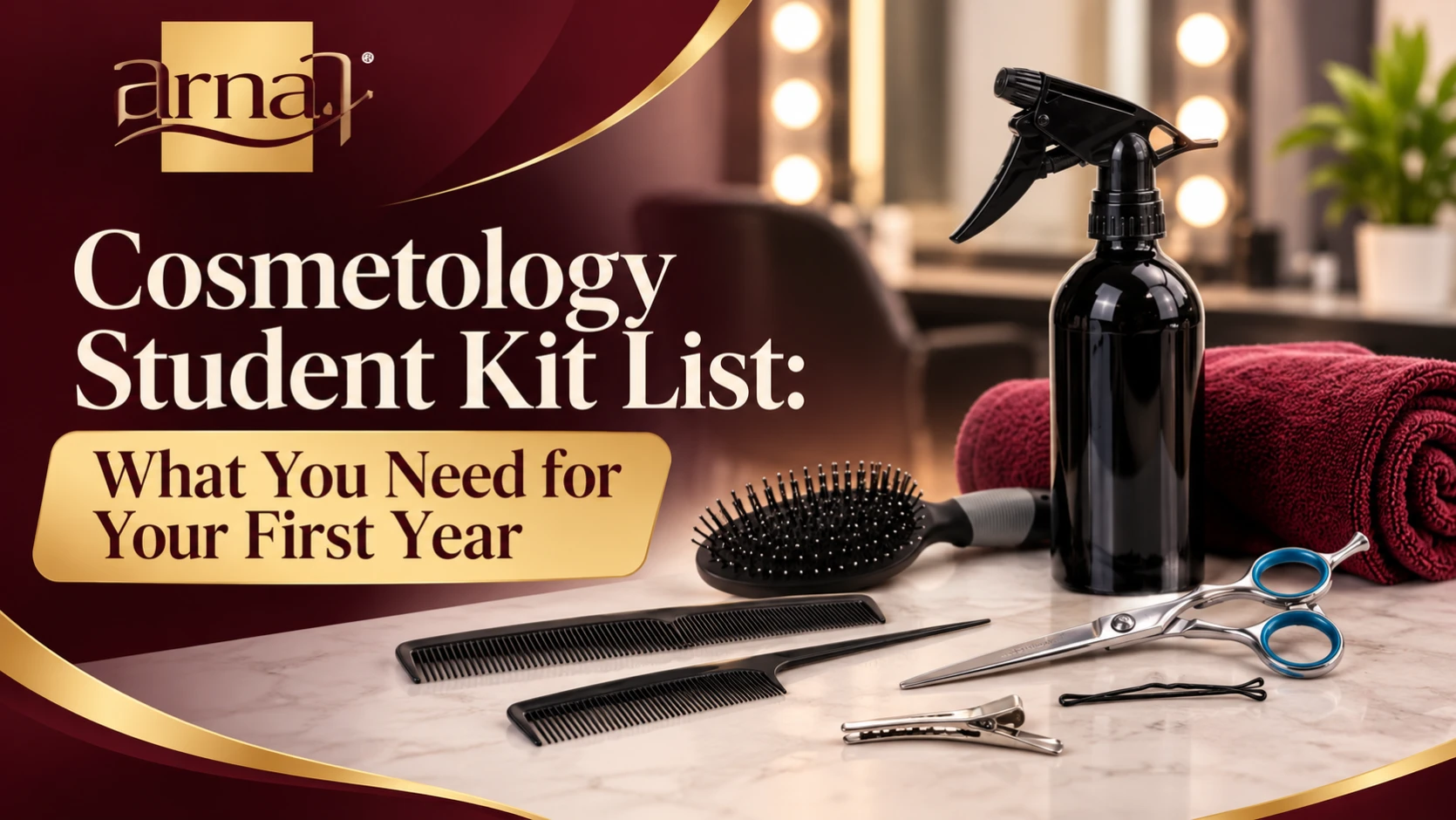
The short version: most cosmetology kits include cutting shears, thinning shears, combs, brushes, sectioning clips, a spray bottle, a cape, a mannequin head with a stand, perm rods or rollers and a case to carry it all. Heat tools, color supplies and textbooks depend on the school.
First, check your school's list
Before you buy anything, find out three things:
- Is the kit part of your program fees? Some schools include it and hand it to you on the first day.
- Do you have to buy from a specific supplier? Many schools order kits for the whole class.
- Can you bring tools you already own? Some schools allow it, some do not.
If you are left-handed, say so early. It changes what you need (more on that below).
The core kit, tool by tool
| Tool | What it is for | What to look for |
|---|---|---|
| Cutting shears | Cutting hair. This is the tool you will use most. | Most beginners start somewhere between 5″ and 6.5″. Pick the size that feels comfortable in your hand. |
| Thinning or texturizing shears | Removing bulk and blending lines. | You will use them far less than your cutting shears, so you do not need to start with an expensive pair. |
| Combs | Parting, sectioning, cutting and detangling. | A cutting comb, a tail comb and a wide-tooth comb cover most work. |
| Brushes | Blow-drying and styling. | A round brush, a paddle brush and a vent brush are common starting points. |
| Sectioning clips | Holding hair out of the way while you work. | You will go through more than you expect, so a good handful is better than a few. |
| Spray bottle | Keeping hair damp while you cut. | A fine, even mist works best. |
| Cape | Protecting the client’s clothes. | Easy to wipe clean and not too stiff. |
| Mannequin head and stand | Practicing cuts, styling and color without a client. | A solid stand that does not wobble matters more than people expect. |
| Perm rods and rollers | Perm and set work. | A mixed set of sizes. |
| Case or bag | Carrying and protecting your tools. | Room for shears, combs and brushes, with a place for each. |
Some programs also ask for a razor or hair shaper, heat tools, color bowls and brushes, or manicure items. Your school’s list will tell you.
Cutting shears: the one purchase worth slowing down on
Your shears are the tool you will hold for hours, so comfort counts. If you can, hold a pair before you buy. The blades should open and close smoothly, with no grinding, and your thumb and ring finger should not feel strained.
If you are left-handed, look for shears made for the left hand. Right-handed shears used in the left hand usually push the hair instead of cutting it cleanly, which makes learning harder than it needs to be.
Mannequin heads: human hair or synthetic?
Both are used in schools. Human hair behaves like a real client’s hair, so it is the better choice for cutting and color practice. Synthetic hair is fine for basic styling and for getting comfortable with your tools. Ask your instructor which one your program expects before you buy a head of your own.
Mistakes students make with their kit
- Buying before they have the list. The most common one. Wait for the school’s list.
- Doubling up. Buying a tool the school kit already includes.
- Forgetting left-handed tools. Check this before ordering, not after.
- Not labeling tools. In a classroom, combs and clips look the same. Mark yours.
- Putting tools away wet. Dry everything before it goes back in the case.
Looking after your tools
Wipe your shears and combs after each use and dry them before you store them. Keep shears in their case so the blades do not knock against other tools. Follow the sanitation rules your school and province set, and use the care instructions that come with each tool. Your instructor will show you the routine your program expects.
For instructors and school administrators
If you are building a kit list for your program, Arnaf builds custom student kits around your curriculum. You choose the products and quantities, and we assemble, package and personalize the kits for your school. See Custom Student Kits or Apply for a School Account.
For students
Arnaf supplies schools, not individual students. If you would like your school to look at Arnaf kits, share this guide with your instructor or admissions office and ask them to get in touch.
Frequently asked questions
Usually cutting shears, thinning shears, combs, brushes, clips, a spray bottle, a cape, a mannequin head with a stand, perm rods and a case. The exact list depends on your school.
It depends. Some schools include the kit in the program fees, and others have students buy it. Ask your school before you buy anything.
It varies a lot by school and by what the kit includes. Your school can tell you what to budget.
Usually yes. Shears made for the left hand cut more cleanly in a left hand than right-handed shears do.
Some schools allow it and some do not. Ask before the first day.
Written by the Arnaf team.